When I was little, people in my neighborhood used to call me Maradona because I could run really fast. That was actually the first time I ever heard his name. And the more they called me Maradona, the faster I ran. Eventually, I went on to compete professionally in athletics for many years, became a licensed athlete for ENKA Sports Club, and won quite a few medals.
But in Turkey, for most people, success means academic success above all else. So instead of perhaps becoming the next Elvan Abeylegesse — a Turkish athlete who was breaking world records around the time I was competing — I did well in the university entrance exam, got a little too comfortable with that achievement, and, of course, said goodbye to my athletic career.
Then, at university, Maradona somehow found his way back into my life.
During my third year, one of my closest girlfriends and I booked a tour to Naples and Bari. We were incredibly excited and, naturally, told everyone about it. But as soon as we mentioned our plans to a friend who had previously lived in Italy, she gave us one very serious piece of advice:
“When you get to Naples, if someone asks you — as if it were the most normal question in the world — ‘What do you believe in?’ you say: Maradona.”
She made absolutely sure we wouldn’t forget it.
Then, as if good things really do fall apart when you announce them too soon, the tour company cancelled our long-awaited trip because there weren’t enough participants.
And so, somewhere deep in my brain, I carried this one essential piece of information for twenty years:
When I finally get to Naples, I will believe in Maradona. :)
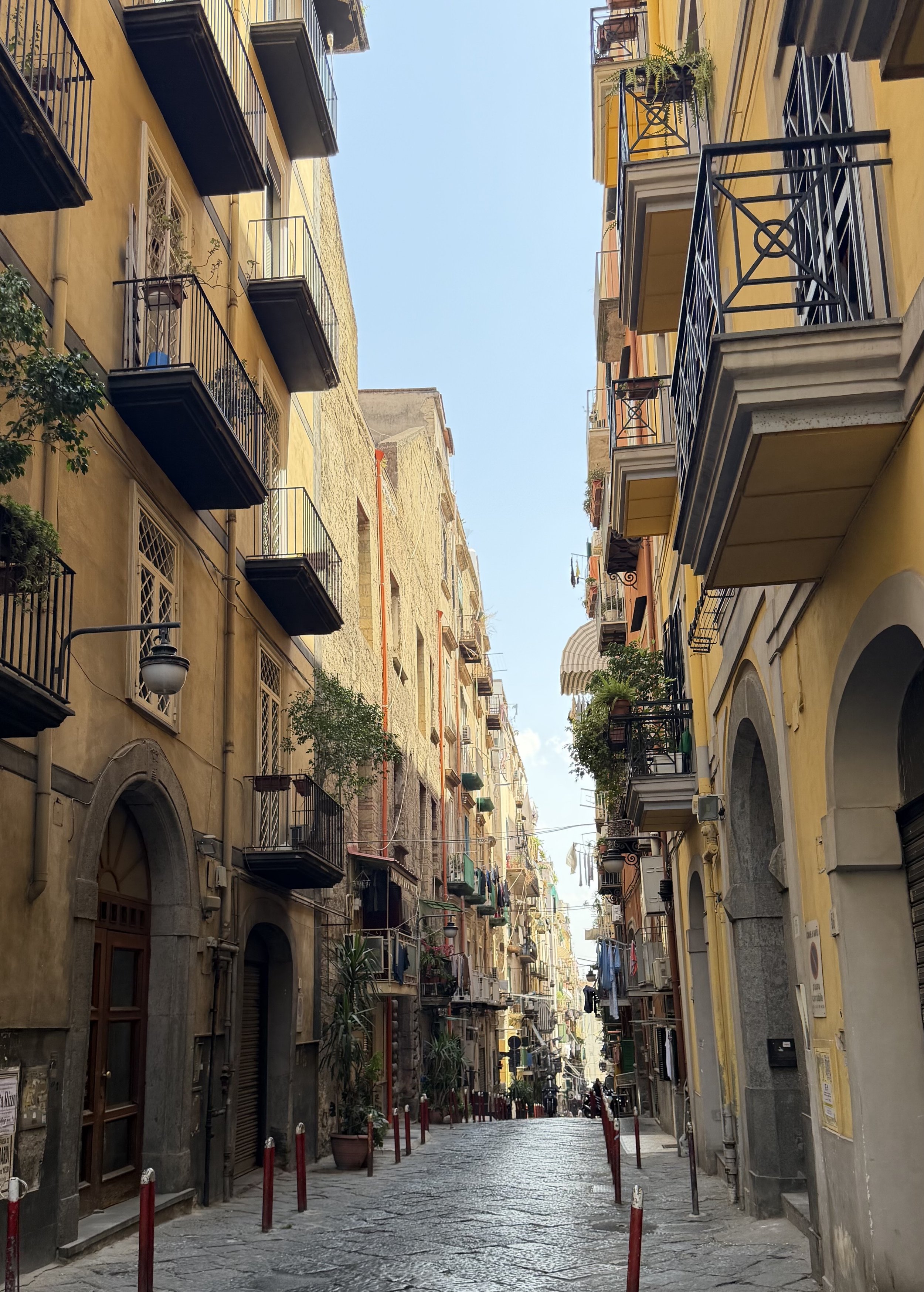
When I finally get to Naples,
I will believe in Maradona…
And years later, when I decided to go to the Amalfi Coast to celebrate successfully completing another 365 days of my life, I landed at Naples Airport believing in Maradona with all my heart. :) And finally, I met the spirit of the sacred Maradona — a man regarded almost as a God by the people of Naples…
Argentinian-born Maradona was already one of the greatest footballers in the world when he transferred from Barcelona to Napoli in 1984. He had grown up in a poor neighborhood in Argentina and written an extraordinary success story for himself, eventually making his way to Europe. At the time, almost everyone knew Maradona, whether they cared about football or not.
Naples, meanwhile, had quite a reputation of its own: the Italian mafia, high crime rates, poverty and serious economic problems. It was a city struggling in the shadow of Italy’s wealthy and rather arrogant north. But when Maradona arrived, the story of Naples began to change too.
And from here on, it really does sound like a legend.
At the 1986 World Cup, while playing for Argentina against England in the quarter-final, Maradona scored one of the most controversial goals in football history — with his hand. The referee didn’t see it and, luckily for Maradona, VAR didn’t exist back then. :) When he was asked about the goal after the match, he gave one of the most unforgettable answers in football history: the goal had been scored “a little with the head of Maradona and a little with the Hand of God.”
Even today, Maradona is often spoken of as a kind of God of football.
But what turned that match into an even greater legend happened only a few minutes later. This time, Maradona received the ball inside his own half, carried it for around 60 metres, passed the English players one by one, went around the goalkeeper and scored.
His first goal became known as “The Hand of God.”
His second would later be named “The Goal of the Century.”
If you would like to see it, you can watch it here: Maradona – Goal of the Century
But what Maradona means to Naples goes far beyond all of this.
He is everywhere in the city. His face is painted on walls, his shirts hang in shop windows, his photographs sit on tiny shrines, his portrait appears on the plates you eat from — you can even find him on underwear. That last one was perhaps a little too much for me, but never mind. :)
The people of Naples truly loved him in an extraordinary way. Because after Maradona arrived, Naples was no longer known only for crime, poverty and exclusion. Suddenly, it was also the city that had the best footballer in the world.
For them, Maradona became something much bigger than a football player. He became a symbol of hope.
And aren’t we all, somehow, always looking for something to hope for?
Perhaps, like the rest of us, the Neapolitans simply needed an idol, something to believe in — a savior whose story could remind them that better days might come again. And perhaps that is why, all these years later, they still keep his memory so vividly alive.
Who knows…
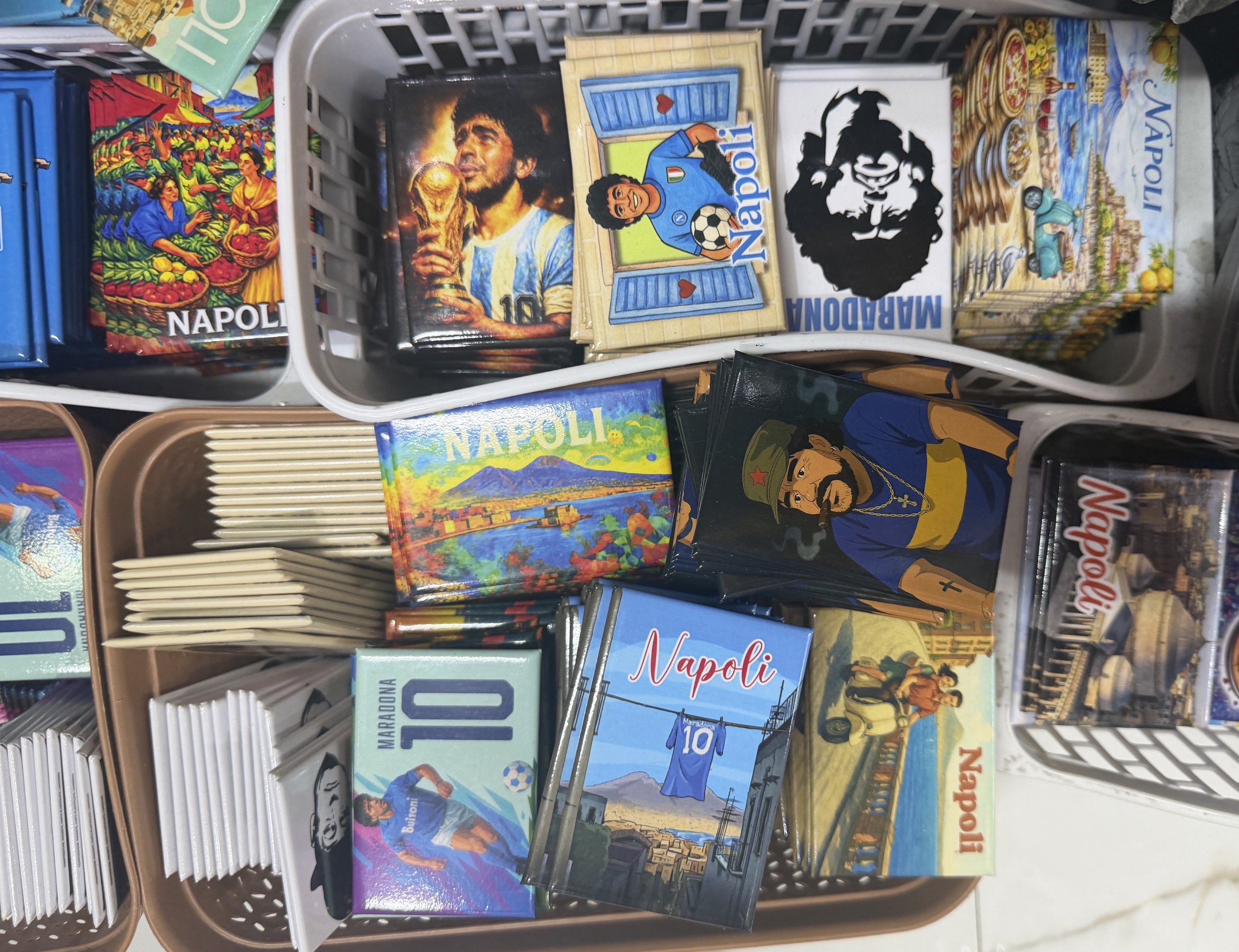
Maradona- Naples
Now, let’s move on to the world-famous Amalfi Coast — a name that instantly brings three things to my mind: a convertible, a scarf blowing in the wind, and effortless elegance.
To reach the Amalfi Coast, you can fly either to Naples or Salerno, located at opposite ends of the coastline. Another option is to fly to Rome and continue by road. Salerno is actually closer to the heart of the Amalfi Coast, although finding a convenient flight there can be a little more difficult.
We rented a car in Naples and drove down to the Amalfi Coast via Sorrento, following the spectacular route through Positano, Amalfi and Ravello, before continuing in the direction of Salerno.
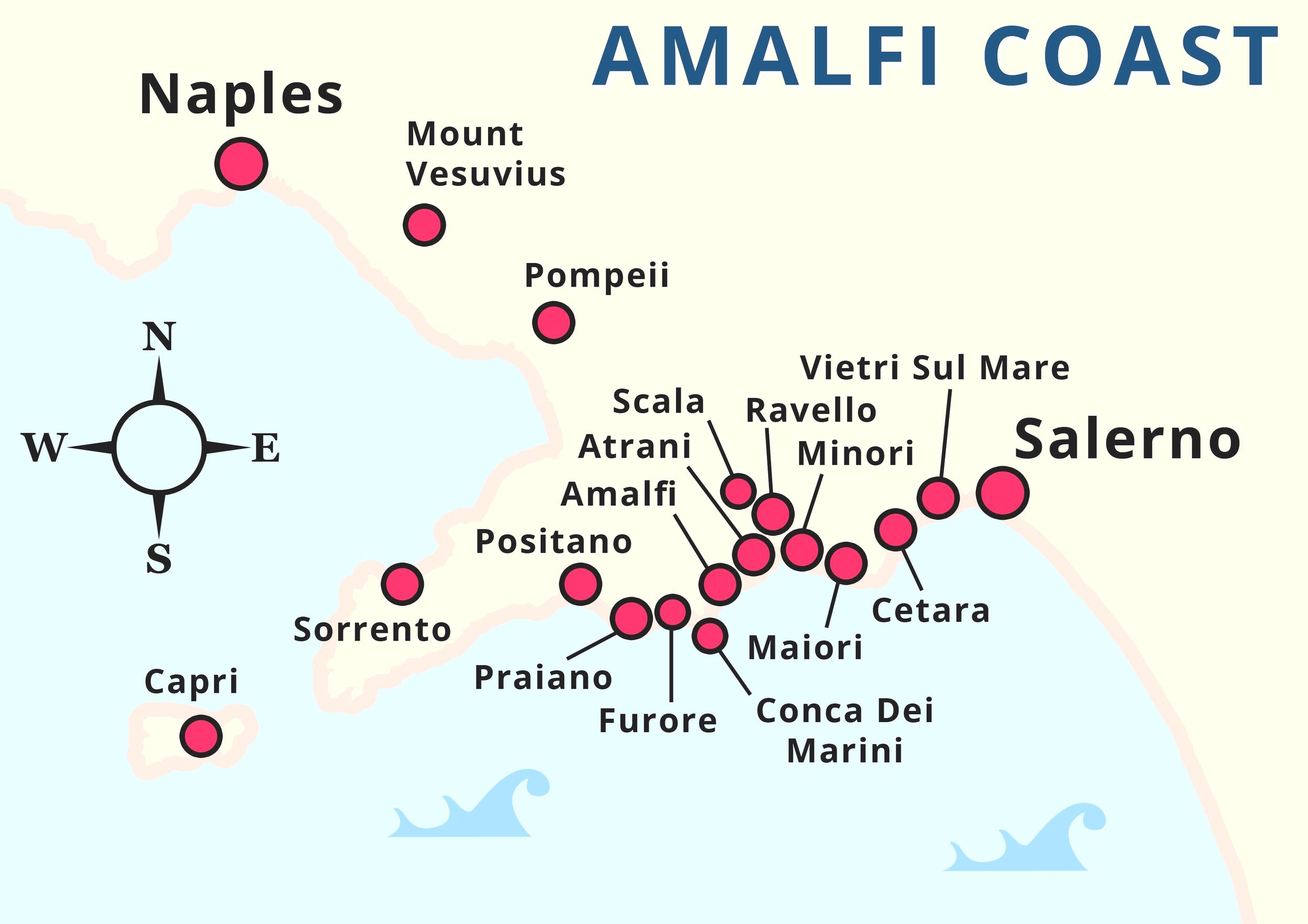
Amalfi Coast Maps
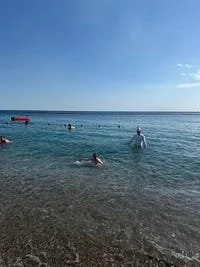
Since we visited during peak season in the Northern Hemisphere, we chose to stay in Maiori, which has a more relaxed and less touristy atmosphere compared with Positano and Amalfi. Maiori is also home to the longest beach on the Amalfi Coast.
Especially after seeing Positano and Amalfi, we realized what a good decision we had made. We weren’t limited to a tiny, overcrowded beach, and we didn’t have to spend our days climbing endless stairs and steep hills. Thanks to Maiori’s long seafront, you can take a leisurely walk by the sea after dinner, actually enjoy your gelato while strolling, and — perhaps most importantly — have a reasonable chance of finding somewhere to park your car.
During our stay, we paid for a parking space at the hotel, but parking while exploring the coast was a completely different story. Be prepared for traffic jams along the coastal roads, speeding minibuses, buses that look as if they’ve had enough of these roads themselves, endless honking, and drivers who apparently decided that the Amalfi Coast was the perfect place to learn how to ride a motorbike. :)
There are simply too many cars and not enough space. Someone told us, “There isn’t a car here without a scratch or a dent.” Turns out, they were right.
Thankfully, our rental car’s roof had somehow managed to survive without hitting anything yet. :)
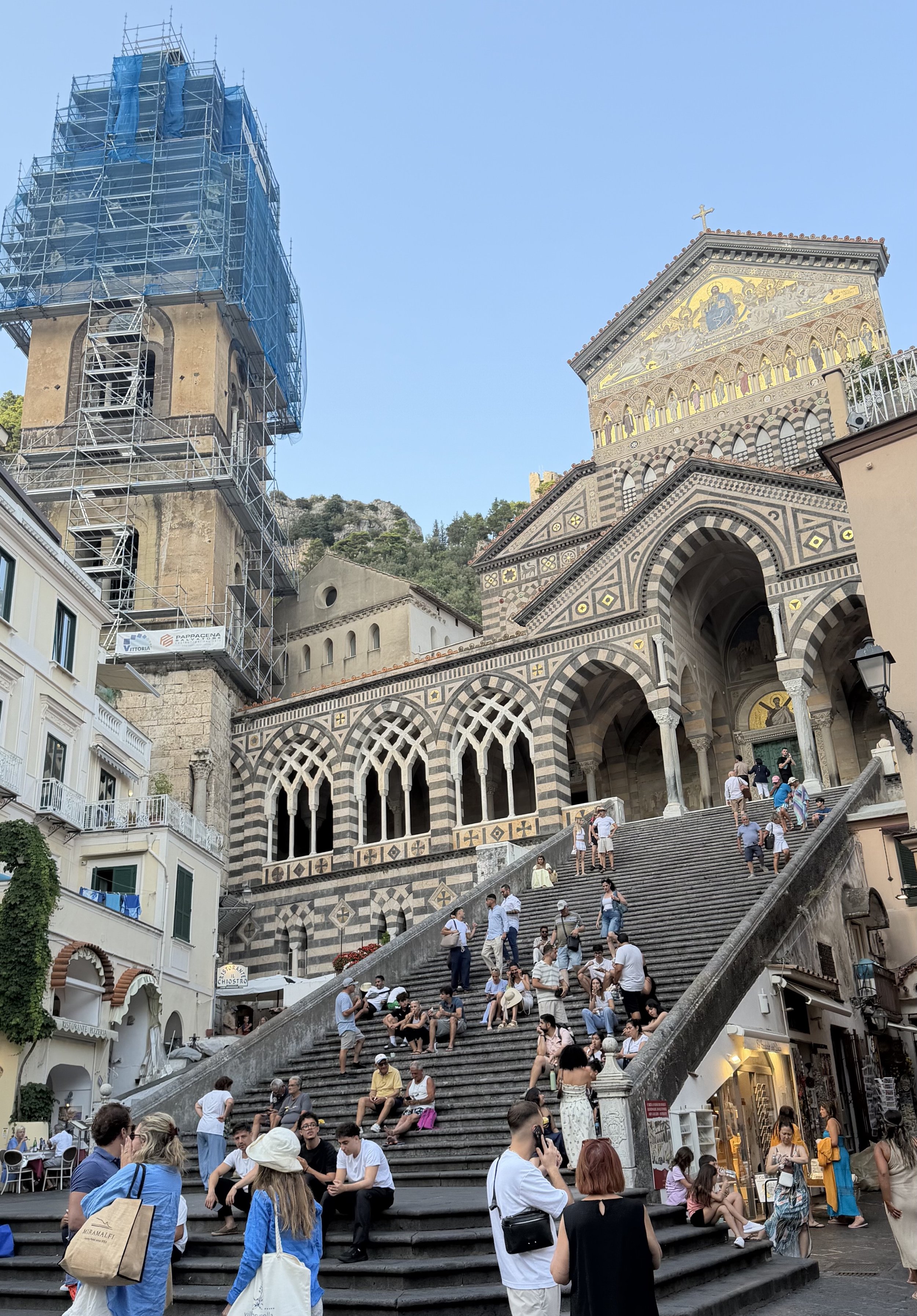
Duomo di Amalfi
The center of Amalfi was only about 5 km from our lovely little town, with Minori and Ravello also just nearby. That makes Maiori a great base for exploring the Amalfi Coast. Compared with Positano and its unmistakable “Instagram destination” vibe, Maiori gives you a little more of everyday Italian life — something more natural, local and authentic.
The place you see in the photo is the Duomo di Amalfi, or Amalfi Cathedral. The origins of this magnificent cathedral date all the way back to the 9th century. Of course, it has been altered, expanded and restored many times over the centuries. As a result, architecturally, it has a little bit of everything: Gothic, Baroque, Romanesque and Arab influences all exist side by side. It feels as though every era — and everyone who came along — left a little piece of themselves behind.
Its striking façade, decorated with black-and-white geometric patterns and mosaics, is probably one of the first images that comes to mind when you think of Amalfi.
But perhaps the cathedral’s most significant feature is that it houses the remains of Saint Andrew, one of the Twelve Apostles. It is believed that his relics were brought to Amalfi from Constantinople in 1206.
And this part genuinely breaks my heart a little.
Whenever I come across historical treasures that once belonged to Istanbul somewhere else in the world, knowing that they did not leave as gifts or through ordinary trade, but were taken during the looting of the city I will always call home, my beloved father`s house, makes my heart ache…
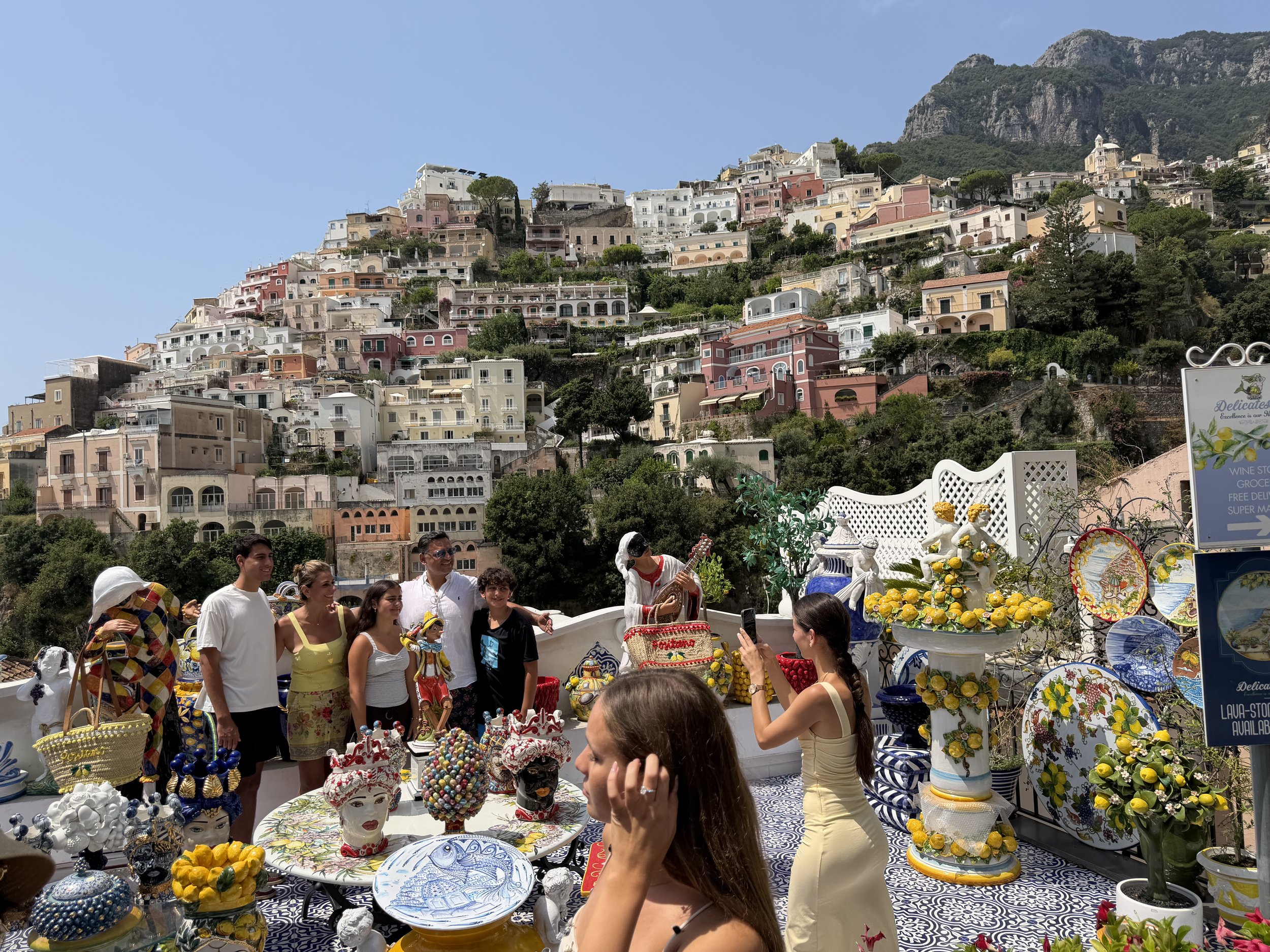
Next up: the Instagram destination, Pooositano…
The most famous spot on the Amalfi Coast, the one we have all seen in countless photographs, and probably one of the places people are most curious about before visiting.
The place you see above was actually designed specifically for visitors to take photos — and yes, you can rent it. The entire setup and decoration exists to create something to share on social media. It really is crazy, this whole world we’ve created, although I’m hardly in a position to judge. Even if I don’t get completely carried away by it, I still sometimes catch myself mindlessly scrolling.
I can convince myself — and everyone else — that “at least I consume good content,” but cruel time doesn’t care about excuses, only about results. And it passes frighteningly fast.
And yes, Positano really is beautiful. The houses, hotels, restaurants, signs, tiny shops… There is an aesthetic awareness behind almost everything, and very little feels visually out of place. To a large extent, Positano has managed to preserve its natural beauty and distinctive character.
But it is crowded.
Positano is already tiny: narrow streets, endless stairs, a small beach, and the same handful of places that everyone wants to see. After a while, you realize you’re looking at the people rather than the view. :)
And, if I’m allowed to say this without getting into trouble, I unfortunately found it a little overrated.
Having seen a large part of the Italian coastline, I personally find Cinque Terre much more charming. There are no cars there, and you can explore its five little villages on foot or by train. Yes, there are stairs — but there is no chaos. There are people, but you don’t constantly feel as though you’re standing on top of one another.
I don’t know, Altan. :)
I really think places this small and special should have some kind of limit on visitor numbers. Because preserving the authenticity of a place isn’t only about protecting its buildings and natural landscape.
It is also about protecting its atmosphere, its tranquility, and its soul.
And sadly, I think Positano may already have crossed that line.
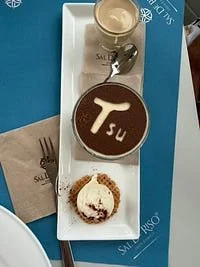
Now, let’s get to the food part. I’m not exactly a huge fan of Italian cuisine, but I absolutely love their desserts, snacks and coffee.
Even while we were waiting for our luggage at the airport, there was a vending machine serving freshly brewed Italian coffee. These people simply do not compromise when it comes to coffee and croissants, my friends. And to be fair, they really do them justice.
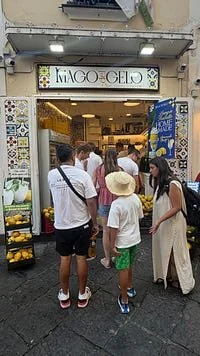
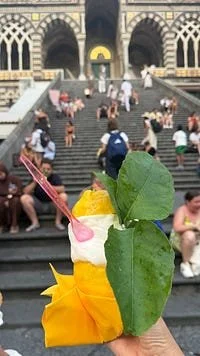
Then there was my birthday cake — which happened to be a giant lemon gelato. Lemon has always been my favorite ice cream flavor. But you know what I love even more? Lemon gelato served inside a real hollowed-out lemon. :)
It is made with the region’s famous local lemons — enormous, wonderfully fragrant lemons that are also an important part of the local economy. It looks beautiful, tastes even better, and smells incredible. Honestly, you don’t just want to eat it; you want to lie down next to it. :)
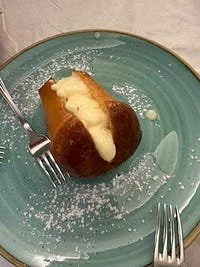
Another one of my birthday cakes was Delizia al Limone: a soft, little dome-shaped cake filled and covered with lemon cream. I highly recommend trying it at Pasticceria Pansa in Amalfi. It is one of the historic pastry shops there, and it was absolutely delicious.
And finally, if you ever find yourself wondering, “Should I have coffee or should I have dessert?” — Affogato might be one of the simplest yet greatest Italian inventions. A scoop of vanilla gelato with hot espresso poured over it. Coffee or dessert? For those who refuse to choose, you get both. :)
Although, come to think of it, perhaps what really makes us grow up is making a choice — and learning to accept the consequences of it…
And just like that, we’ve reached the end of another journey.
I hope your summer has been even more beautiful than you expected, and that it has given you plenty of reasons to smile.
Until next time — take care, and see you on new journeys!
Cheers,
Betty.